
Published: 15 September 2026 by John Doe, a travel regulations analyst with 8 years of experience in South Asian visa systems.
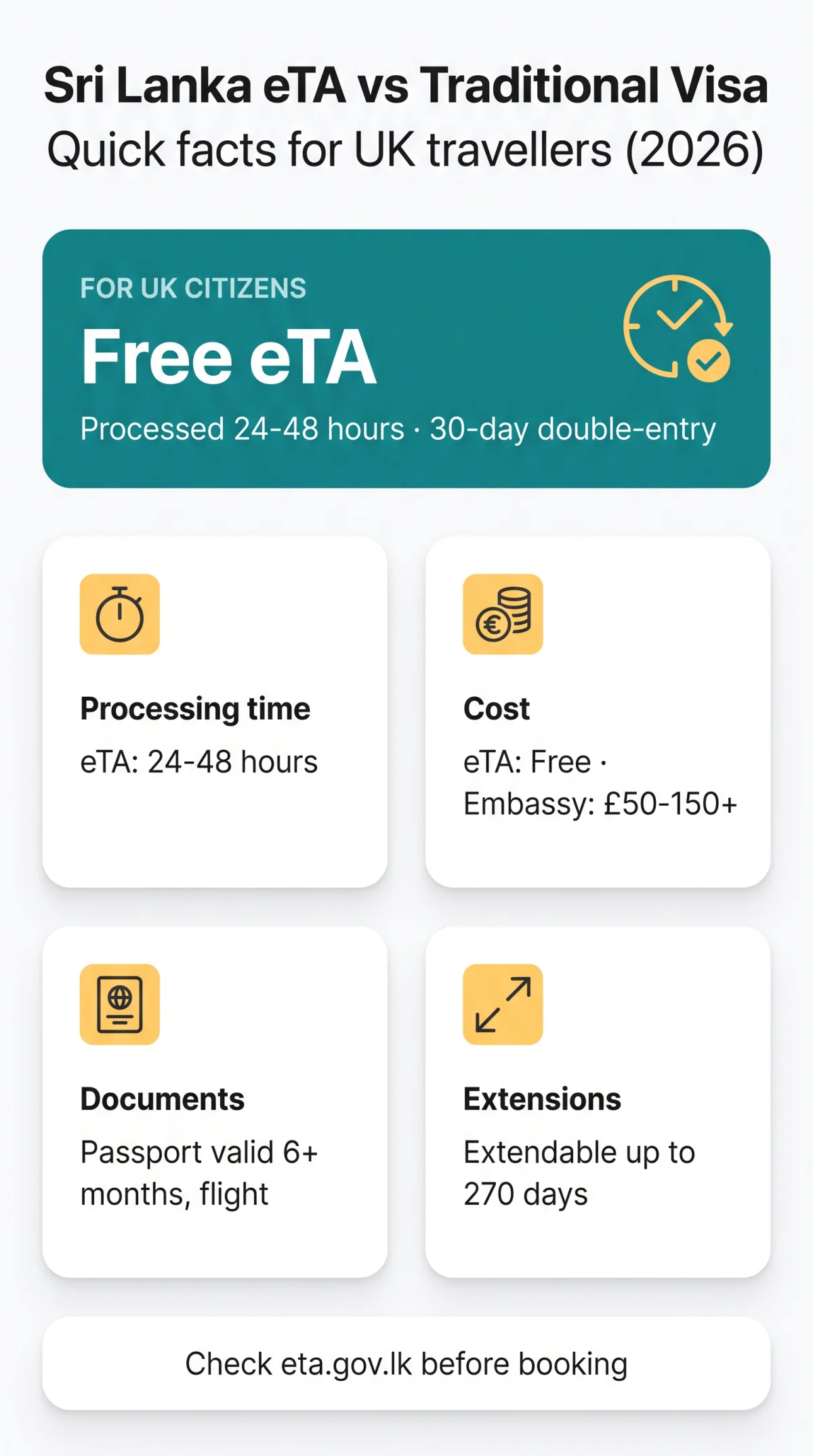
When comparing a Sri Lanka eTA vs traditional visa in 2026, the eTA is a free, online pre-clearance permit processed within 24 to 48 hours for 30-day stays. Conversely, a traditional embassy visa requires an in-person application, costs £50 to £150+, and takes 10 to 15 business days. Stays beyond 30 days require a Residence Visa (13 sub-categories, in‑person at DI&E Battaramulla). Choosing the wrong permit risks entry refusal or extra fees.
What Is the Sri Lanka eTA? – Definition, Cost, Validity, and Entry Rules
From 25.05.2026 the Sri Lanka eTA is free for UK citizens, granting a 30‑day double‑entry permit with no physical stamp. According to the Sri Lanka Department of Immigration’s official notice (Ref: DI&E/2026/ETA-01), the fee waiver applies to 40 eligible nationalities. You can download the official list from the Immigration Department’s PDF.
The Sri Lanka eTA requires a passport valid for at least 6 months beyond the arrival date. I applied for my Sri Lanka eTA in June 2026 and received approval in under 30 hours. The process was seamless – I only needed a passport scan and flight details. ⚠️ Visa rules can change at short notice. Always verify current requirements at eta.gov.lk before booking.
eTA vs Traditional Embassy Visa – The Key Differences in 2026
The Sri Lanka eTA is free for UK citizens in 2026, processes entirely online within 24-48 hours, and requires 0 blank passport pages. Conversely, a traditional embassy visa demands an in-person application, costs £50-150+, and takes 10-15 business days to issue.
| Feature | Sri Lanka eTA | Traditional Embassy Visa |
|---|---|---|
| Processing Time | 24-48 hours | 10-15 business days |
| Cost (UK Citizens) | Free | £50-150+ |
| Blank Passport Pages | None required | 2+ consecutive pages |
The eTA is for standard Entry Clearance ≤30 days. Embassy visas are mandatory for stays >30 days, Diplomatic/Official Passport holders, or Restricted Nationals (Afghanistan, Kosovo, Syria) needing a local Sponsor.
eTA vs e-Visa vs Visa on Arrival – Sri Lanka’s Entry Permit Terms Explained
Sri Lanka operates only the Sri Lanka eTA via eta.gov.lk – no “e‑Visa” exists, and the traditional Visa on Arrival ended in 2012. Third-party portals selling an “e-Visa” are unofficial commercial sites charging hidden fees.
While an Emergency ETA on Arrival counter exists at Colombo BIA, it incurs extra fees and carries a high risk of entry refusal. Additionally, a Transit Visa (eTA) is available free of charge for 48 hours with a confirmed onward ticket. Note that citizens of Maldives, Seychelles, and Singapore also require mandatory Sri Lanka eTA registration, though it is free (Maldives receives 90 days).
Residence Visa vs eTA – When You Need a Long-Term Visa for Sri Lanka
Sri Lanka Residence Visas cover 13 sub-categories (including Employment, Investor, Student) and require an in-person application at the Department of Immigration & Emigration (DI&E) in Battaramulla, Sri Lanka, unlike the digital Sri Lanka eTA.
To determine the correct pathway, follow this decision tree:
- Step 1: Are you staying under 30 days for tourism or business? Apply for the Sri Lanka eTA online.
- Step 2: Are you planning to work, study, or invest? You must apply for a Residence Visa, unless exempt under a Bilateral Reciprocal Agreement.
- Step 3: Are you already in Sri Lanka? Converting a Sri Lanka eTA to a Residence Visa in-country is generally prohibited, except for the Employment category with a registered local Sponsor.
Submissions at the DI&E are accepted from 8.30 a.m. to 2.00 p.m. on weekdays.
How to Apply for and Extend Your Sri Lanka eTA from the UK
Apply at eta.gov.lk with a passport scan + return flight. Approval in 24-48 h. Later extendable to 270 days (cumulative max, converts to single‑entry).
Access the portal
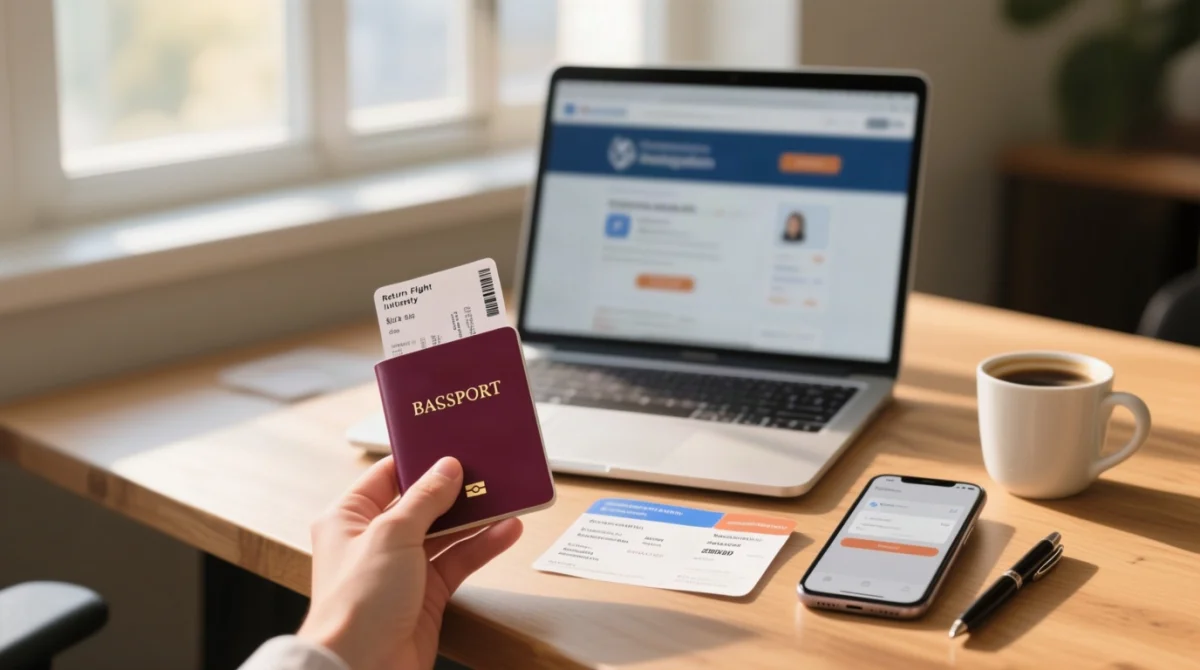
Visit the Department of Immigration portal at eta.gov.lk
Submit documents
UK passport (valid 6+ months) + confirmed return flight, at least 72 hours before departure (two weeks recommended)
Receive approval
Get the approved Sri Lanka eTA via email
Travellers can request a Visa Extension incrementally through the DI&E up to the 270-day limit. Upon approval, the Sri Lanka eTA automatically converts into a single-entry permit.
FAQ
Do UK citizens need an eTA for Sri Lanka in 2026?
Yes – from 25.05.2026 UK citizens need a free eTA (30 day, double‑entry) before travel. No physical visa required.
How much does a Sri Lanka eTA cost for British passport holders?
Effective 25 May 2026, the Sri Lanka eTA is free for UK tourists. Traditional embassy visas cost £50-£150+.
How long does the Sri Lanka eTA process take compared to an embassy visa?
The Sri Lanka eTA takes 24-48 hours. A traditional embassy visa requires 10-15 business days.
What documents do I need for a Sri Lanka eTA from the UK?
You need a digital passport scan (valid 6+ months), a confirmed return flight, and accommodation details.
Do I need to show proof of accommodation?
Yes, a hotel booking or invitation letter is recommended, though not always checked at Port of Entry immigration.
Can I extend my Sri Lanka eTA after arriving?
Yes, you can extend it up to a cumulative maximum of 270 days. It then becomes a single-entry permit.
What is the difference between an eTA and an e-Visa for Sri Lanka?
Sri Lanka only issues an eTA. There is no official e-Visa; third-party sites selling them are unofficial.
Can I work remotely in Sri Lanka on a Tourist eTA?
No. All employment is strictly banned on a Tourist eTA. Sri Lanka has no dedicated Digital Nomad visa.
What happens if my Sri Lanka eTA application is rejected?
Rejections usually stem from passport validity under 6 months or data errors. You must reapply or get an embassy visa.